Barath Velmurugan

Forward Deployed Engineer, Google

Profile Photo

Hi! I am a Forward Deployed Engineer (GenAI) at Google in New York City. I recently completed my Master of Business Analytics at MIT, where I was a Graduate Research Assistant advised by Professor Vivek F. Farias. Before that, I received my B.Math in Statistics & CS from the University of Waterloo, where I was mentored by Professor Steve Drekic. Outside of work, I'm usually building something: agents, eval tools, small experiments with language models. I'm also a huge basketball fan! Please reach out!

Research

My research so far spans generative modeling of digital twins, behavioral simulation using large language models, and token entanglement in language models. I am interested in how large language models reason about human behaviour, and what their hidden representations mean for interpretability and safety! My recent work includes synthetic customer modeling at Anheuser-Busch InBev through MIT, and independent work on how models pass along preferences through data that seem meaningless.

Work Experience

Forward Deployed Engineer, Generative AI · Google | Sept 2026 – Present

Early engineer in Google Cloud's new FDE org, building specific intelligence (agents, evals) for healthcare & life sciences.

More
  • Forward deployed on an eight-figure GenAI engagement with one of the largest US health systems, on a two-engineer team
  • Co-created DemoForge, a real-time demo builder that spins up a working Gemini Enterprise app or custom React UI from the conversation at any point in a customer call; rolling out internally across the org to customer engineers, starting with the healthcare & life sciences vertical
  • Co-authored a computer vision paper with Google researchers (3rd of 6 authors), under review at CVPR 2027
  • Built an agent plugin and custom eval for FDE onboarding which was adopted into the org-wide new-hire guide
  • Certified as a Google Cloud Professional Cloud Architect (Oct 2026)
Machine Learning Engineer · Wayward (Series B) | Feb 2026 – Aug 2026

Brand–partner matchmaking and monetization modeling for Wayward’s partnership platform.

More
  • Shipped the live brand-publisher discovery-scoring model (LightGBM, 1,123 pairs scored) over 14.2M ad-spend rows ($247M GMV) across 8 publishers and 590 brands; engineered 2 external Google search-volume signals to score cold-start brands with no campaign history; AUROC 0.68 (0.73 with prior history), validated per-publisher on a temporal holdout
  • Owned the ROAS-based labeling and feature pipeline; caught a $16M attribution blind spot (48 brands) from a case-insensitive join bug before it corrupted training; rebuilt the model's top feature to lift coverage from 2.5% to 98.8%
Graduate Research Assistant · Massachusetts Institute of Technology | Sept 2025 – Aug 2026

LLM-based digital twins and behavioral simulation for ABI’s Zé Delivery (5M users) platform.

More
  • Developed an AB InBev digital-twin pipeline converting 319 Brazilian-Portuguese interviews into 291 queryable personas
  • Built a GEPA prompt-evolution loop to learn 20 behavioral rules per persona, replacing manual prompts with persona cards
  • Deployed an LLM-as-judge evaluation harness over 5,590 held-out turns with a 4-dimension rubric, scoring 4.72/5.0 overall
GenAI Lab Team Member · BMW Group (Innovation & Research) | Feb 2026 – May 2026

Implementing a feedback-driven prompt optimization pipeline for continuous AI agent adaptation without retraining.

More
  • Created a prompt optimization pipeline for OCR extraction, improving accuracy by 54% (0.437 to 0.673) over 5 iterations
  • Built an evaluation layer, fixed scoring bugs, and used model-vs-prompt ablations (+0.188 vs +0.025) to guide refinement
Analytics Lab Team Member (2025 Winners) · Mira Intel | Sept 2025 – Dec 2025

Computer vision & multi-agent workflow for wind-turbine damage detection and forecasting.

More
  • Awarded 1st Place in MIT Analytics Lab (top team among 22 teams across 21 industry partners) [official announcement]
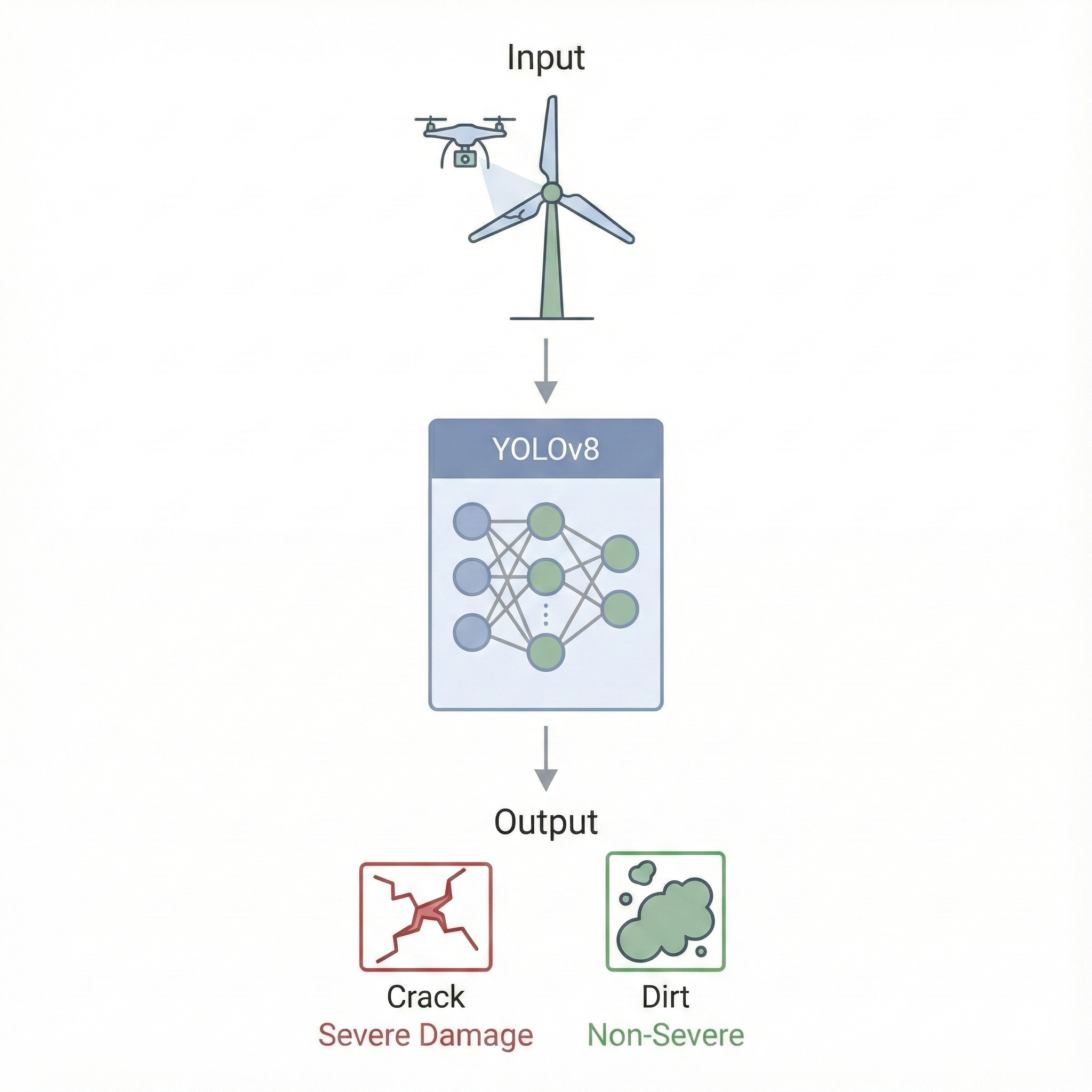
  • Constructed a computer vision pipeline that ingests images of wind-turbine blades, predicts damage, and forecasts wear
  • Engineered a YOLOv8 damage detector using Python achieving 0.96 F1 on critical defects via class-imbalance correction
  • Architected a multi-agent workflow using OpenAI Agent Builder to convert lengthy damage reports into prognostic JSONs
Software Engineer Intern · PointClickCare | Sept 2024 – Dec 2024

A full-stack platform for the Senior Living Resident Management market (React & Python).

More
  • Built a feature enabling an Azure GPT3.5 Turbo model to review lengthy SQL files and flag syntax deviations in pull requests, providing real-time non-intrusive quality checks using Groovy (i.e., undisturbed Jenkins build)
  • Took ownership of complex React UI features such as debugging production issues, building a multi-select search filter, and enabling editable time fields for “move-out” operations
Software Engineer Intern · Manulife | Jan 2024 – Apr 2024

Qualys Cloud Agent automation in Ansible using Azure Metadata and YAML.

More
  • Proved out Qualys Cloud Agent functionality in Ansible by leveraging Ansible Modules, Azure Metadata, and YAML
  • Built a Chef feature using Ruby to validate access control policies (Sudo, HBAC) during the provisioning of a server, strengthening security and reducing server deployment time by 15%
Software Engineer Intern · Manulife | May 2023 – Aug 2023

PySpark and Databricks pipelines for large-scale database migration (80K records).

More
  • Transformed data fields using PySpark and Databricks to support large-scale database migration of 80,000 records
  • Refactored a mission critical React project by consolidating logic, modularizing code, and deleting files
  • Built API-driven table rendering functionality (< 3s response) using TypeScript, React, and Material UI
  • Streamlined client data entry by adding button functionality and 5 conditional fields using React Hooks and JSX
Software Engineer Intern · Manulife | Sept 2022 – Dec 2022

Azure Logic Apps integration of Manulife Bank (SOAP) and Salesforce (REST).

More
  • Integrated Manulife Bank (SOAP) with Salesforce (REST) using Azure Logic Apps, achieving 42% more performance (less than 1s latency) and near-zero downtime compared to the previously deployed PCF model
  • Solved authentication using Azure App Service to allow the Logic App to hit the bank’s on-prem SOAP APIs
  • Strengthened Logic App security by implementing OAuth 2.0 authentication using Azure Active Directory
Software Engineer Intern · PointClickCare | Jan 2022 – Apr 2022

Azure Event Hub deployment & Python multithreading for large-scale (22M+) data ingestion.

More
  • Provisioned an Azure Event Hub using Java and Terraform to enable parallel ingestion of 22 million patient data
  • Leveraged Python multithreading to reduce script validation time for OHDSI datasets with 150,000 rows by 56%
  • Programmed an Azure Function using Java to detect the health of a Redis cache and PostgreSQL application
Software Engineer Intern · PointClickCare | May 2021 – Aug 2021

API development and unit testing using Spring and JUnit.

More
  • Engineered a new API in 1 week (half a sprint) using Spring to inform 10,000+ vendors on ancillary charge statuses
  • Integrated 20+ comprehensive unit tests with JUnit for public APIs to improve API robustness and maintainability

Papers

Subliminal Prompting Beyond Static Geometry: Causal Depth and Multi-Token Confounds thumbnail
Subliminal Prompting Beyond Static Geometry: Causal Depth and Multi-Token Confounds
Barath Velmurugan
arXiv preprint (cs.CL), July 2026
Separates four measurements of token entanglement (output co-variation, output-vector alignment, hidden-state readability, causal control) in a fixed animal-number prompting protocol. From Llama-3.1-8B to 70B the fixed output-vector account predicts behavior less well, while transferring a hidden state controls the answer earlier in the network; a Qwen multi-token confound is resolved through total covariance.

Selected Research Reports

Computer Vision for Automated Damage Detection in Offshore Wind Turbine Inspection thumbnail
Computer Vision for Automated Damage Detection in Offshore Wind Turbine Inspection
Barath Velmurugan, Riya Parikh, Ayela Chughtai, Lauren Montigue
Massachusetts Institute of Technology
Developed a YOLOv8-based offshore turbine damage detection system with 96.5% F1 on severe defects, projected to save $3.4M over 25 years for a 100-turbine wind farm.
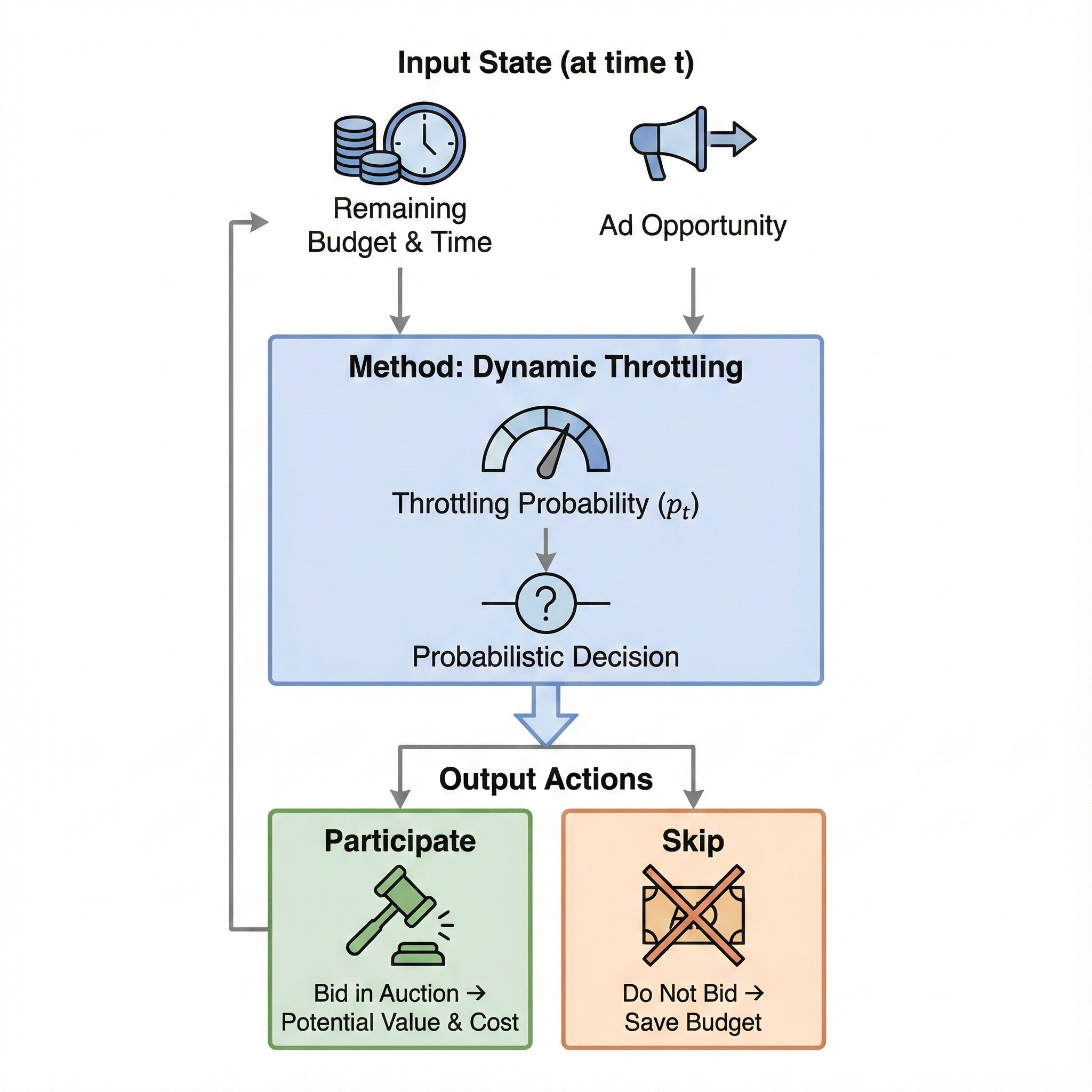
Online Budget-Aware Ad Allocation with Dynamic Throttling and Dual-Pricing Policies thumbnail
Online Budget-Aware Ad Allocation with Dynamic Throttling and Dual-Pricing Policies
Barath Velmurugan, Billy Gunawan, Nathan Wangidjaja
Massachusetts Institute of Technology
Developed adaptive budget-aware algorithms for online ad allocation, narrowing the optimality gap to 4.5% on a 100k-impression dataset.
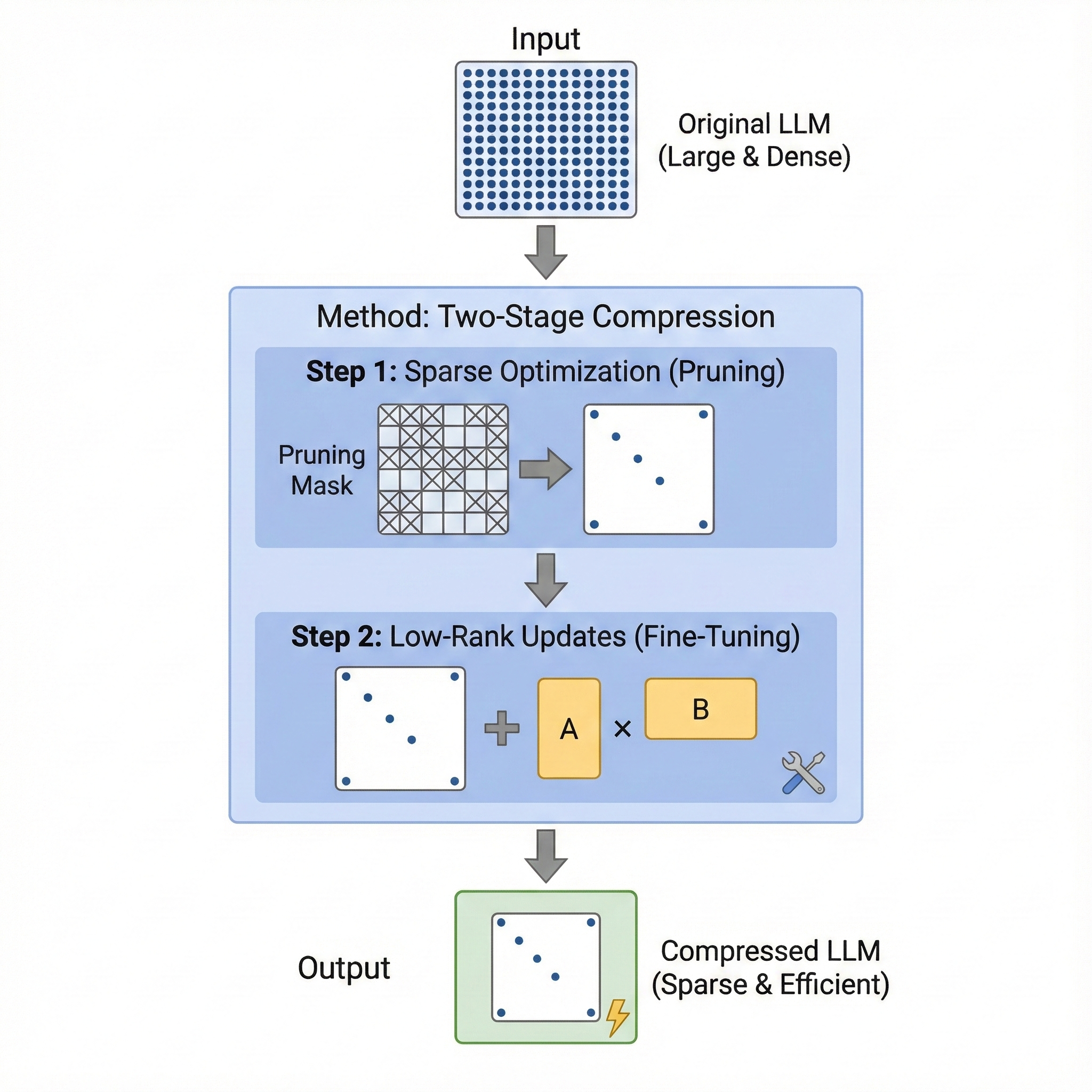
Sparse Optimization for LLM Compression under Data Scarcity: Evidence from DistilGPT-2 thumbnail
Sparse Optimization for LLM Compression under Data Scarcity: Evidence from DistilGPT-2
Barath Velmurugan, Mrugank Pednekar
Massachusetts Institute of Technology
Applied L1 (lasso) and group lasso methods to prune DistilGPT2 (82M parameters) using the WikiText-2 dataset, reducing parameter count while maintaining perplexity.
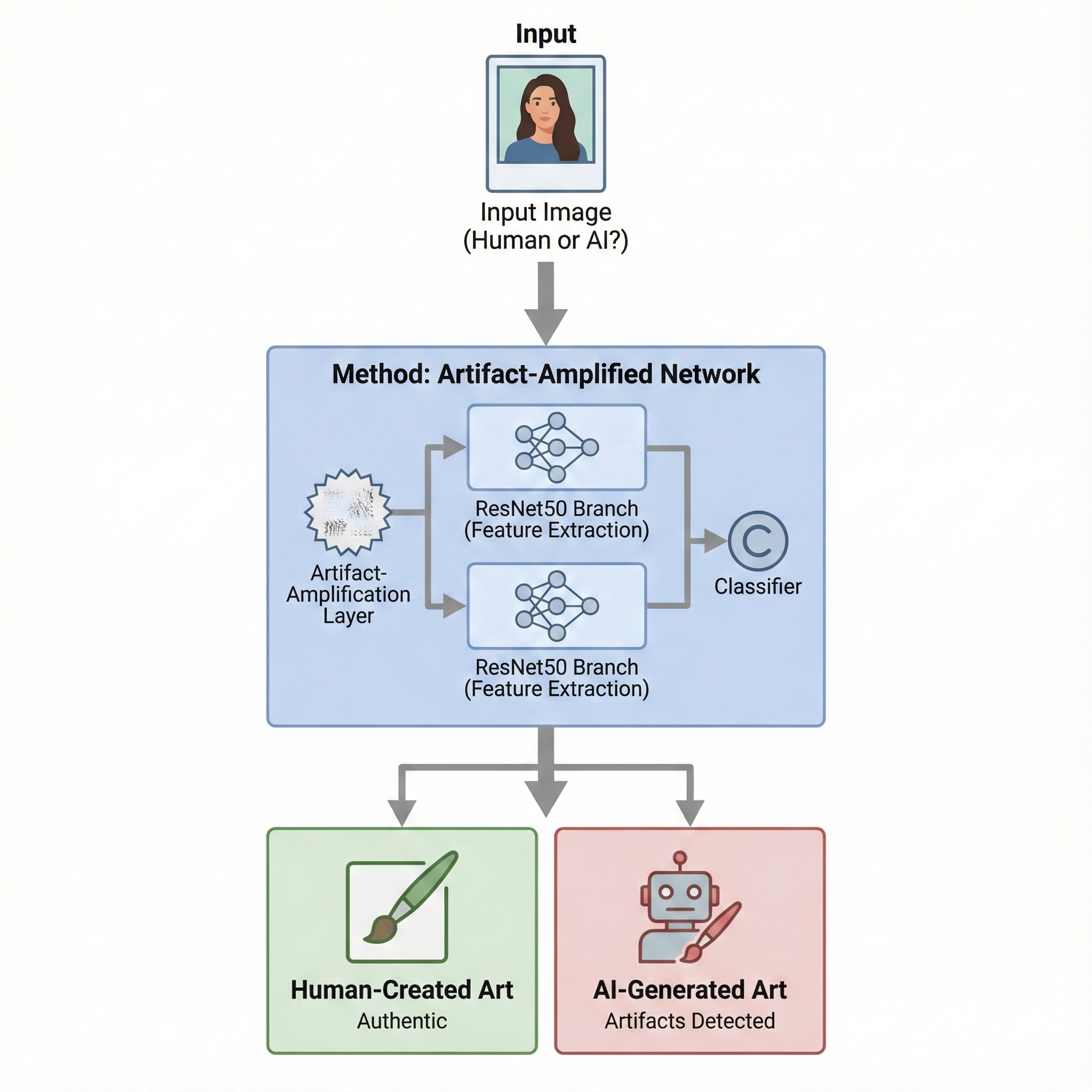
Detecting AI-Generated Art through Generative Artifacts: A CNN–ResNet50 Comparison thumbnail
Detecting AI-Generated Art through Generative Artifacts: A CNN–ResNet50 Comparison
Barath Velmurugan, Owen Bao, David Izrailov, Mrugank Pednekar
Massachusetts Institute of Technology
Built and benchmarked real-vs-AI artwork classifiers using custom CNNs and pretrained vision models (CNNs, ResNet) on a 21k-image dataset, achieving high-accuracy discrimination for art-fraud detection.

Projects

Distillation / Agents
Kaetram Arena

Teaches a small open model (Qwen 2B) to play a persistent open-world MMORPG through long-horizon, tool-mediated actions, with teacher and student sharing one typed 17-tool API. Copying a stronger cross-family teacher made the student worse; on-policy distillation from a same-family teacher lifted it from 12 to 18 out of 30 on a long-horizon quest benchmark.

Interpretability
Subliminal Learning

A replication and extension of Anthropic's subliminal-learning result across both image and language models; it traces the effect to the two models starting from the same initialization rather than to the training data, and reconciles two published numbers that had disagreed.

Agent Evaluation
Crucible

A small team of cooperating agents (a researcher, a reviser, and an LLM judge) that grades how faithfully an AI's answers stay grounded in their sources and how much of the relevant material it retrieves, with per-call cost and latency tracing; built on Google's ADK and runs fully offline.

ML Data Infra
Clinical Corpus Pipeline

Turns synthetic medical records and claims into training examples where every clinical statement traces back to the exact source it came from, gated by automated privacy and grounding checks; dependency-free, 54 tests.

Interpretability
Attractor Lens

A tool for studying what happens when a language model is left talking to itself: it detects when the conversation converges into a repeating pattern using embedding similarity rather than the eye, and tests whether the opening prompt predicts where it lands; runs fully local.

Applied AI
Deterministic Voice Intelligence

A finance voice assistant built around one rule: speech recognition and the LLM only turn what you say into structured commands, while plain deterministic code makes every real decision and calculation, so the model can't invent a transaction; 85+ tests.

RAG / Systems
ScreenMem

Gives your Mac a searchable memory of what has been on screen: it captures and reads the screen locally, then lets you search by keyword or meaning and ask questions, with every answer linked back to the moment it appeared; nothing leaves your machine.

Applied AI / Web
Spark Studio

An AI coding playground for kids: describe a game and it builds a playable version, then shows the real code behind it and lets them ask questions and remix each other's work; 3rd place at the Claude Builders @ MIT hackathon.

Full-Stack Web
Project SERVE

A full member portal for a school volleyball club, with sign-in, analytics, and event registration, built end to end with Flask, Streamlit, and SQLite; an earlier team project.

Extracurricular

Clubs

MIT AI & ML Club, MIT Tech Club, MIT Project Management Club, UW Data Science Club, Stanford ASES

Conferences & Events

CODE@MIT (2025), GAI World (2025), Hack The North (2024), Jane Street FTTP (2021)

Interests

strategy games (e.g., Chess), lo-fi music, long road-trips, and electronic music production!

© 2026 Barath Velmurugan | 341 visits